




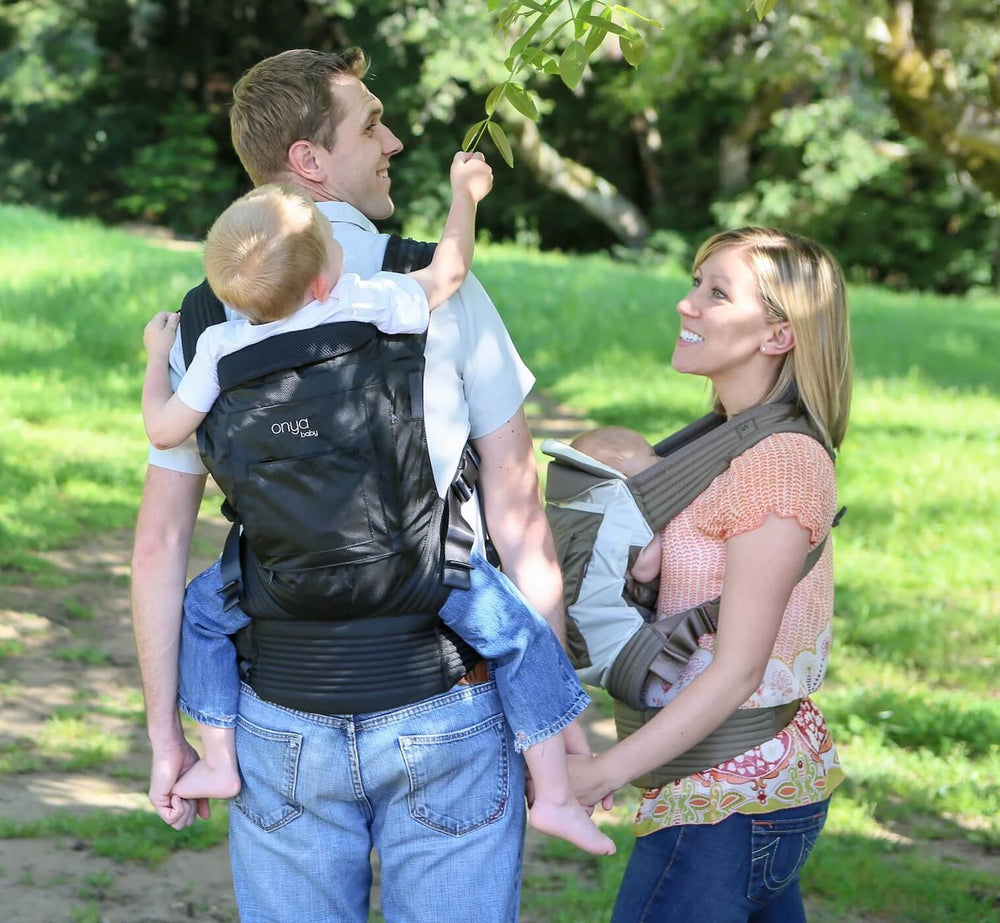
Babywearing Back Carry: Tips For Comfort
Last Updated: November 13, 2025
Here’s a little tip that can make your back-carry babywearing experience more enjoyable and comfortable:
When you’re adjusting your baby carrier, be sure that the waist belt is on your upper hips nice and snug, and the shoulder straps aren’t too tight. Also, check that the chest area is comfortable and supported, using chest passes or chest support if needed. If you’re feeling a pulling or tingling at your shoulders, it might be because the shoulder straps are too tight. With the waist belt snug and the shoulder straps eased up a bit, you should find a great hip-centered weight-distribution.
At this point, make sure your baby's knees are supported at the correct height for ergonomic positioning, and that the baby's arms are in a safe position. Achieving a good seat—supporting your baby from knee to knee—will help keep your baby's legs and hips in a healthy position. Double-check all adjustments before moving to ensure your baby's neck and back are well supported, especially for newborns and young babies. You want the bulk of your baby’s weight to be resting on your hips, not your shoulders, and this will help ensure that.

Don’t forget to consider your own comfort, too. The best baby carrier is one that fits your body well and feels good during use. Some parents prefer a snug, supportive fit, while others appreciate the adjustability of a full buckle carrier or the versatility of a woven wrap. If you’re unsure, it can be incredibly helpful to try on different carriers or consult with members of the babywearing community for tips and advice.
Climate and activity level are also important factors. For hot weather, lightweight and breathable fabrics—like those found in certain woven wraps or ring slings—can help keep both you and your baby cool. If you plan to carry baby during outdoor adventures or more structured activities, a full buckle carrier or a soft structured carrier may provide the extra support you need.


